
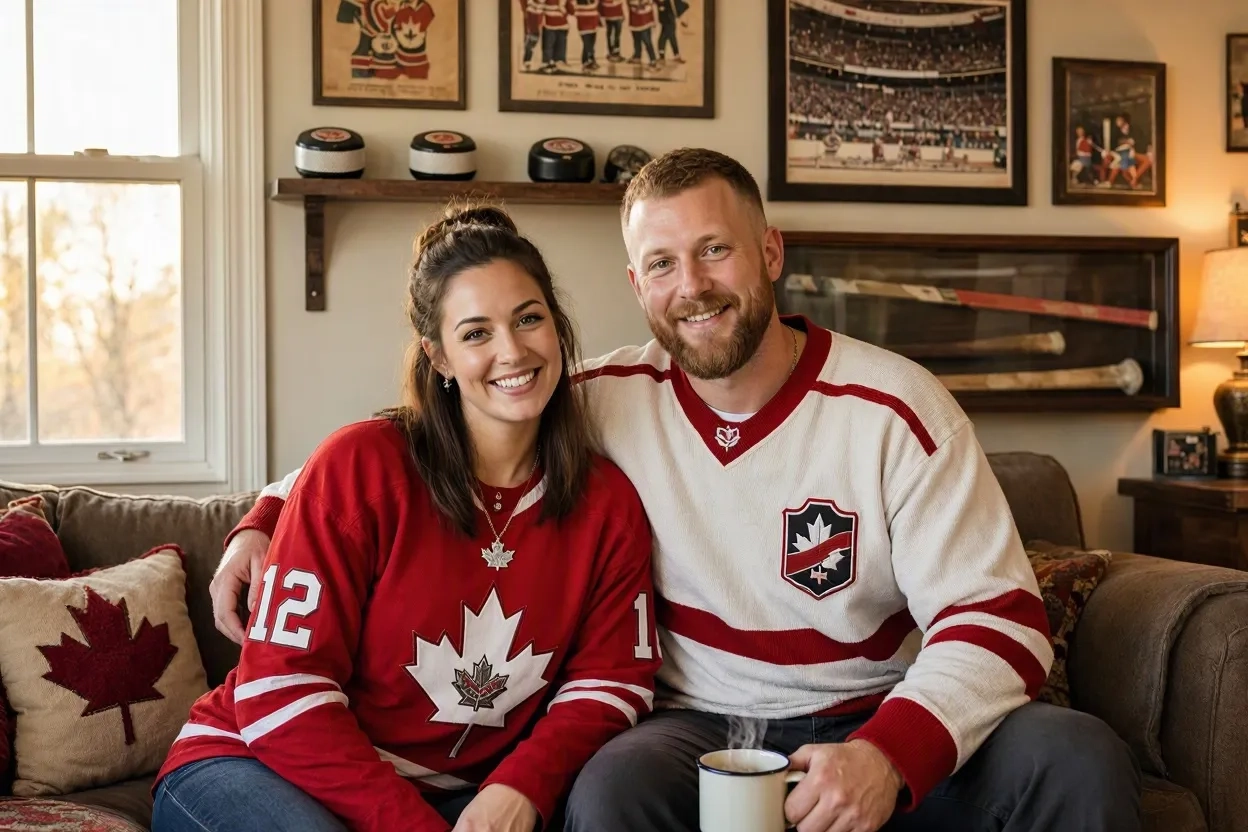
Step 1: Create your account
Start by choosing Signup Here. You will set up a login, confirm you are an adult, and give a few basics such as your age, gender, who you are interested in and roughly where you live. Location is used to show you people nearby, so use your real city or the closest larger one.
Take two minutes to pick a username you will not be embarrassed by in a year. "LeafsFan1967" is fine. Something that only makes sense to your rec-league teammates may not be.
Step 2: Say how hockey fits your life
This is the step that makes the site work. Generic profiles get generic replies. Hockey profiles get conversations.
Some prompts to write from:
- Your team, and how long. Did you inherit it from a parent, or pick it during a memorable playoff run?
- Watcher, player or both. If you play, mention the level and position. "Beer league defence, more enthusiasm than talent" is a better line than "I play hockey".
- Your game-night style. Couch with snacks, a crowded pub, the arena whenever you can afford it, or the radio in the kitchen while you cook.
- The off-season. What do you do from June to September? Golf, camping, the cottage, a slow summer of baseball?
- Your deal-breakers, gently. If you need a partner who can handle you missing a Saturday dinner for a tournament, it is kind to say so early.
Then add interests from the list on your profile. Ice/Roller Hockey, Ice Skating and Curling are there, along with outdoor options such as Hiking, Camping and Snow Sports.
Step 3: Add photos that show your world
Upload at least three photos. Lead with a clear photo of your face, smiling, with nothing covering it. Then show something from your life: a skate on an outdoor rink, a playoff party, a summer evening on a patio.
Skip photos where a helmet and cage hide your face. They are great memories, but they tell a stranger nothing about who is under the visor.
Step 4: Choose who you want to see
Set an age range and a location radius. If you live in a big NHL city, a tight radius may be plenty. In a smaller centre, consider widening it. People often travel an hour or two to see a game, and many will do the same for a promising date.
Step 5: Start conversations
Look through profiles and message people who interest you. Reference something specific. Some openers that tend to work:
- "Your profile says you've never missed a home opener. What's the streak at?"
- "Goalie in a Sunday league? I have so many questions."
- "You picked Ice Skating and Hiking. Outdoor rink or frozen lake?"
If someone writes to you and you are not interested, a short polite reply is better than silence, though silence is always allowed.
Step 6: Choose a plan if you want more
Nothing needs paying for while you set up. If you decide you want more from the site, there are two paid tiers, VIP and VIP Plus, with one-week options at C$19.99 and C$22.99 respectively. Longer plans cost less per week, and 12-month plans do not renew automatically. Every price is on the pricing page.
Step 7: Plan a first meeting
When you both feel comfortable, suggest a short first meeting in a public place. Hockey gives you good options:
- A coffee before an afternoon skate at a public rink.
- Watching the first two periods at a busy sports bar, with the option to stay for the third.
- A junior or university game, which is often easier on the budget and gives you plenty to talk about.
Tell a friend where you are going, arrange your own way home, and keep the first meeting short enough that it can end gracefully. For the full checklist, see staying safe when you meet; for plans by season, see hockey first date ideas.
Step 8: Keep it respectful
Rivalries are fun until they are not. Teasing about a team is fine; mocking someone's city, family or background is not. If anyone pressures you, asks for money or sends something you did not ask for, block and report them.
Common mistakes to skip
A few habits hold people back, and they are easy to fix:
- Helmet photos only. Show your face clearly in the first picture.
- One-word descriptions. "Hockey." tells nobody anything. Write three or four sentences.
- Copy-paste openers. People can tell. A line that refers to their profile works far better.
- Disappearing mid-chat. If you are no longer interested, a short kind message is better than silence.
- Rushing to meet. A few days of chat helps both of you feel comfortable and filters out people who are not genuine.
- Hiding the schedule. If you play three nights a week, say so early. Surprises in month two help nobody.
How long it takes
There is no typical timeline. Some people start a good conversation in their first week; for others it takes longer, especially outside the big cities or in the middle of a busy season. What tends to help is a complete profile, a sensible search area, and a habit of checking in a few times a week rather than once a month. Treat it like a rec league: show up regularly, be a good teammate, and good things tend to happen over a season.
What makes a profile work here
After a while you notice patterns in the profiles that get thoughtful replies. They are specific. They mention one or two real details about hockey and one or two about life outside it. They sound like a person, not a list. And they are honest about time: how many nights the game takes, and how many it does not.
A useful exercise is to read your profile aloud. If it sounds like something you would say to a new friend at a rink, it is probably good.
Where to go next
Local guides help when you are planning dates: try Toronto, Montreal, Calgary or any city on our locations page. Curious how we stack up against other ways of dating? See the comparisons.
Step one takes a few minutes: Signup Here. If you started a profile earlier, Sign in and pick up where you left off.