
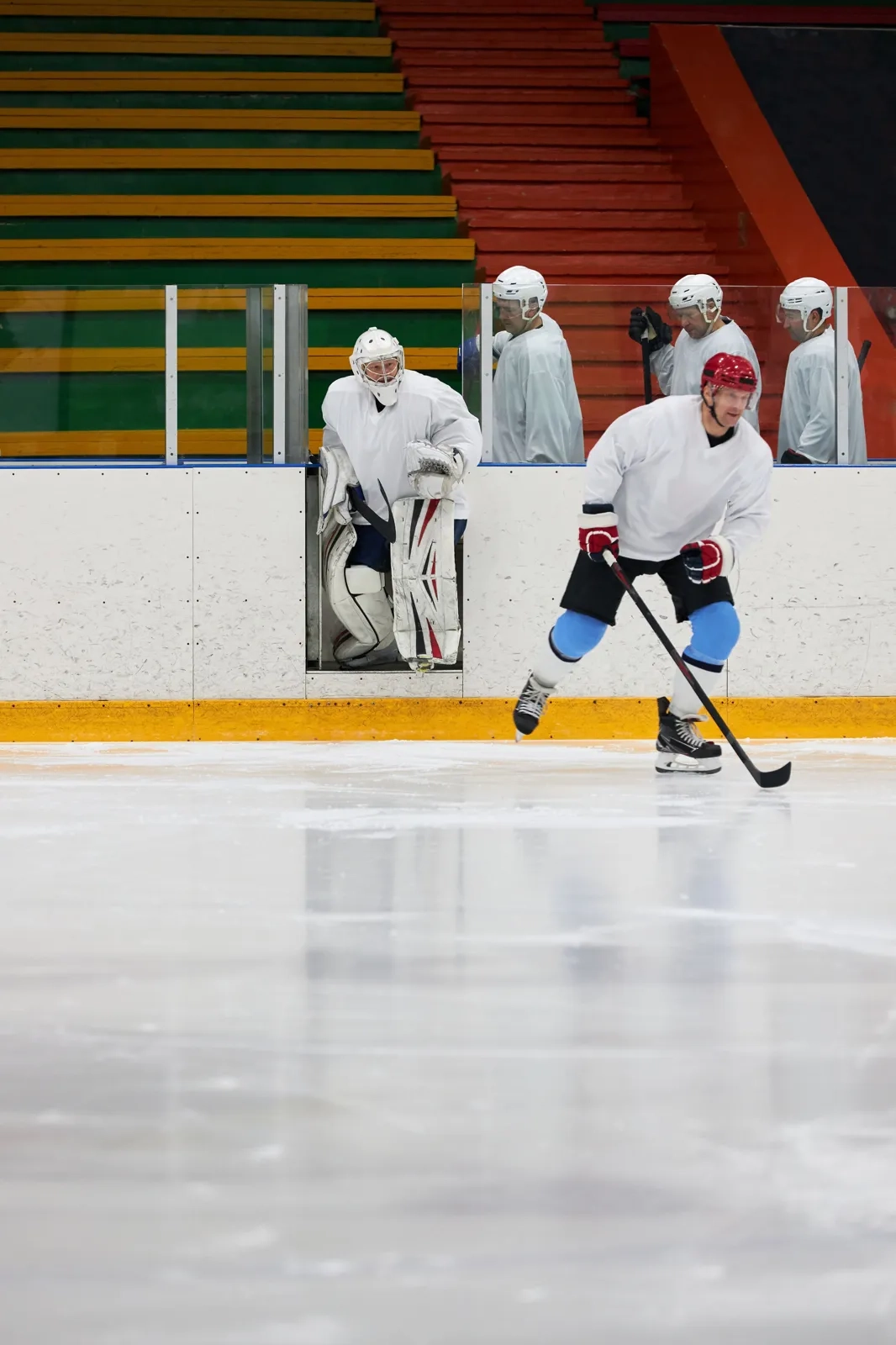
Most hockey players are not in the NHL
Search for "how to date a hockey player" and you will find plenty of fantasy about pro athletes. Real life in Canada is more ordinary and more interesting. The hockey player you are most likely to date is a nurse who plays defence on Wednesdays, an electrician who still skates with the guys from high school, a teacher in a women's league, or a university student balancing classes with a varsity schedule.
Each of those lives comes with its own mix of practices, games and travel. Understanding which one you are dealing with is the first step.
The levels, and what each means for dating
Adult recreational and beer league
The most common by far. Games are often once or twice a week, sometimes very late because prime ice time goes to kids and competitive teams. A 10:30 p.m. start is normal in many cities. After the game there is often a drink in the parking lot or at a nearby bar, which matters to the players more than outsiders expect.
What it means for you: they will be busy one or two evenings a week, may be tired the next morning, and will occasionally disappear for a weekend tournament. It is a hobby, not a career, and most players are happy to fit it around a relationship.
Junior and university hockey
Here the commitment jumps. Practices, gym sessions, games and road trips can fill most evenings and many weekends. Junior players are often young and living with billet families away from home. University players juggle the sport with academic work.
What it means for you: few open evenings, travel that comes in clusters, and a partner whose mood can track the team's results. It works best when you have a full life of your own.
Coaches, referees and former players
People who coach minor hockey or officiate games often have schedules as packed as players, mostly on weekends and early mornings. Former players who stopped competing usually keep a strong bond with the game and may play casually.
Schedules: the thing everyone underestimates
If one thing defines dating a hockey player, it is the calendar. Before you get attached, ask:
- Which nights do you usually play or practise?
- Are there tournaments coming up, and do they involve travel?
- How long is your season, and what do you do in summer?
These are not intrusive questions. They show you are taking the relationship seriously, and most players will appreciate them. Keep a shared calendar once things get going. It sounds unromantic but heads off a lot of missed dinners.
The dressing room and the parking lot
Teams build strong friendships. The post-game beer, the group chat and the annual tournament weekend are part of the deal. Trying to compete with the team is a losing game. Getting to know the teammates, coming to a game now and then and laughing at the group chat stories works far better.
That said, a healthy partner will make room for you too. If every spare evening goes to the team, it is fair to say so.
Injuries and the hard nights
Hockey is physical. Sprains, bruises, a cut chin, a sore back or worse come with the territory, even at recreational level. Concussions deserve particular care: if your partner takes a hit to the head, encourage them to stop playing and get checked by a doctor, even if they insist they are fine.
There are also emotional lows. A bad loss, a benching or a season-ending injury can hit hard, especially for younger competitive players. Sometimes the best help is not advice but company, a meal and an evening that has nothing to do with hockey.
Going to games
Watching your partner play is a nice gesture, though it may not be the glamorous outing you imagine. Recreational games happen in cold community arenas with small crowds. Bring a warm coat, a hot drink and maybe a friend. Cheer, but do not shout instructions. If you want to understand what is happening, ask questions afterwards rather than mid-game.
For junior or university games, you will be in a bigger crowd and can enjoy the event as an outing in its own right. Junior hockey in particular is a great, budget-friendly date for two.
Common worries, honestly answered
"Will I always come second to hockey?" Not if the relationship is healthy. The sport takes time, but a good partner makes you a priority in the hours it does not use.
"Do I need to understand the game?" No. Curiosity helps. Many partners learn the basics in a season simply by watching a few games together.
"What about the smell?" Real, and solvable. Gear should be aired out after every use, not left in a car trunk. You are allowed to insist.
How to meet someone who plays
If you want a partner who plays, a few approaches help:
- Look for profiles that mention a league, position or tournament. On our site, many people add Ice/Roller Hockey to their interests and describe their level in their profile.
- Try a learn-to-skate or adult beginner program yourself. It is a great way to meet people and understand the sport.
- Go to rec-league games with a friend who plays. Teams often socialise afterwards.
If you play, how to date well
Players, this part is for you. Be upfront about your schedule from the start. Invite your date to a game, but do not make it the first date. Air out your bag. Ask about their week as often as you talk about yours. And when the season ends, plan something special that has nothing to do with the rink.
Questions worth asking early
You can learn a lot about whether dating a player will work by asking a few gentle questions in the first weeks:
- What does a normal week look like for you in January?
- Do you travel for games or tournaments, and how often?
- How do you usually spend the night after a game?
- What do you do in the summer?
- Do you want to keep playing at this level for years, or is it winding down?
The answers are not tests. They simply help you picture how the two of you would fit together through a full season.
Next steps
Want more on making it work? Read our guides to beer-league dating and dating someone who doesn't watch hockey. Hoping to meet someone who plays, or simply loves the game? Signup Here and mention your own level, or Sign in to look for profiles that list a league.