
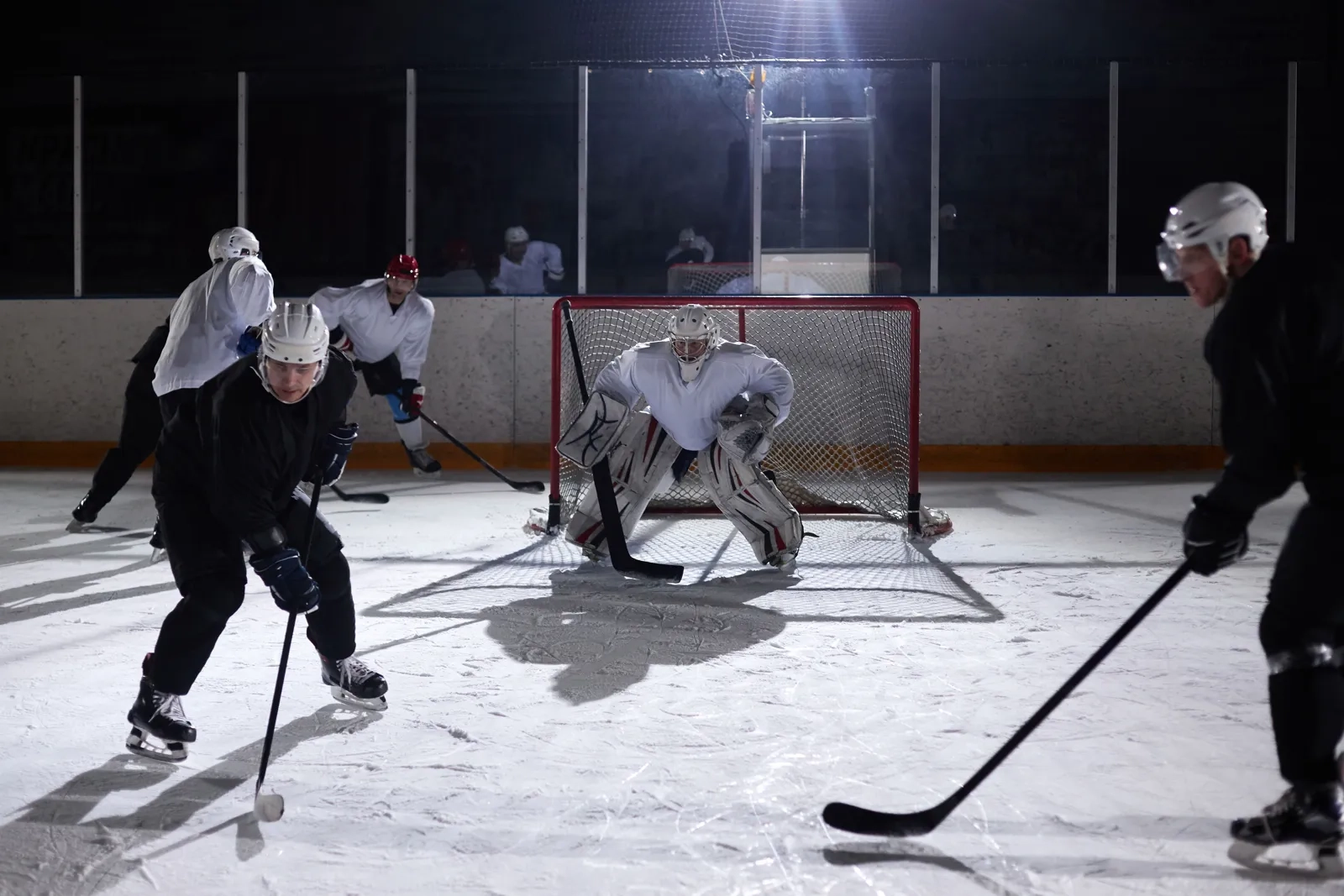
What "beer league" actually means
In Canada, "beer league" is the friendly name for adult recreational hockey. The name comes from the post-game tradition of sharing a drink with teammates, though plenty of players stick to water or pop. Skill levels range from former junior players to people who learned to skate in their thirties. Most leagues have divisions so teams play others at a similar level.
It is one of the most common ways Canadian adults stay connected to the game, and it shapes the week of anyone who plays.
The schedule, explained
Ice is scarce and expensive, and kids' and competitive programs get the best slots. That leaves adult leagues with what is left:
- Late weeknight games. A 10:15 p.m. or 11 p.m. puck drop is normal. Players often get home after midnight.
- Early weekend mornings. Some leagues play at 7 a.m. on Saturday or Sunday.
- Tournaments. Weekend events, sometimes in another town, with three or four games in two days and a lot of time spent together as a team.
If you are dating a beer-league player, learn their game night early. It will not move, and planning around it saves a lot of frustration.
For players: how to date well
A thread on r/beerleague titled "So You Wanna Date a Hockey Chick?" walks through what partners should expect: late games, gear everywhere, and weekends that sometimes disappear for a tournament. It is written with humour, but the message underneath is useful for players of any gender. Be clear about what your hockey life involves, and do not expect a new partner to guess.
Some practical habits:
Say your game night in your profile or early in chat. "I play Thursdays at 10:30, so weekends work best for dates" is helpful, not unromantic.
Do not make the first date a game. Sitting through your rec game in a cold rink is a lot to request of someone you have never met. Save it for when they are curious.
Handle the gear. Hang it to dry after every game. Wash the base layers. Keep the bag out of the bedroom. These small things matter more than any grand gesture.
Watch the post-game hangout. The beer in the parking lot is part of the fun. Coming home at 2 a.m. every week without a word is less fun for the person waiting.
Plan around tournaments. Give notice. Invite your partner if they want to come, and make it worth their while with a good dinner or a side trip.
For partners: what to expect
Tired mornings. Late games mean short sleep, and the morning after can be slow. It is temporary.
Bruises and minor injuries. Even non-contact leagues involve pucks, sticks and the occasional collision. Take any head injury seriously and encourage a doctor's visit.
A strong team bond. Teammates become close friends. Getting to know them is one of the nicer parts of dating a player.
Talk about results. Your partner may want to tell you about the goal they scored or the one they let in. A few minutes of listening goes a long way.
Coming to a game
If you want to watch, great. A few tips:
- Dress warmly. Community arenas are cold, and stands can be bare benches.
- Bring a hot drink. Arena canteens may be closed late at night.
- Do not expect commentary or replays. Ask your partner what to watch for.
- Cheer kindly. Shouting advice at the bench is not appreciated.
- Be ready to wait for them to change, which can take longer than you think.
When both of you play
Two players in one relationship can be wonderful: shared stories, joint gear runs, maybe even a co-ed league together. It can also mean two late nights a week and a hallway full of bags. Coordinate schedules early and decide whether you would like to play on the same team. Some couples love it; others prefer separate leagues so they have something of their own.
Co-ed and women's leagues
Mixed and women's divisions are now common in Canadian adult hockey. They are a good place to meet people with similar interests, though the league is for hockey first and dating second. Be respectful of that. If you hit it off with someone on another team, a friendly chat after the game is fine; repeated advances on the bench are not.
Off-season life
Most leagues run through the fall and winter, with spring or summer sessions for keener players. Summer can feel very different: open evenings, cottage weekends and other sports. Some couples find that is when the relationship really settles in. Plan something together for the off-season so it does not feel like the relationship only exists between games.
Common friction, and how to fix it
"You always choose hockey." Look at the calendar together. Most players can skip an occasional game for an important event if they know in advance.
"Your bag stinks." Agree on a drying spot outside the bedroom. A gear dryer or a fan helps.
"You are always tired." Late games are hard. Plan nice dates for nights that follow a rest day.
"I never see your friends." Ask to come to the tournament or the end-of-season party. Meeting the team helps a partner feel included.
Profiles that work for rec players
If you play, mention it in a way that tells a story. "Centre in a Tuesday league, better at passing than shooting, will talk about the overtime goal I scored in 2019 if given the chance." Add Ice/Roller Hockey to your interests. Include one photo off the ice so people can see your face.
Being the plus-one at the end-of-season party
Most leagues and teams wrap up with a party, a banquet or a night at a local bar. For a new partner, it is a chance to meet the team away from the rink. Go if you are invited. Learn a couple of names beforehand, laugh at the inside jokes you will not understand, and do not be surprised if the stories get longer as the night goes on. Teammates usually appreciate a partner who shows up.
More reading
See dating a hockey player for a broader look at junior and university life, or first date ideas for plans that do not clash with your game night.
Find someone who gets late ice
If you would like a partner who understands why you leave the house at 10 p.m. with a giant bag, a site built around hockey makes that easier. Signup Here and mention your league, or Sign in to update your profile.